Therapy practices in 2026 operate in an increasingly complex environment. Clinicians must balance high-quality client care with administrative demands like scheduling, billing, documentation, compliance, and patient communication, all while adapting to evolving care models and patient expectations.
The right therapy practice management software can dramatically improve efficiency, reduce burnout, and support sustainable growth. The wrong one can slow workflows, fragment data, and limit scalability.
This article reviews the top 6 therapy practice management software platforms in 2026, highlights what each does well, and explains how practices can choose a system that truly aligns with their long-term goals.
What Therapy Practices Need From Software in 2026
Before diving into specific platforms, it’s important to understand what modern therapy practices require.
In 2026, leading therapy practice management systems support:
- Flexible documentation for different therapy modalities
- Integrated scheduling, billing, and clinical workflows
- Secure patient communication and engagement
- Compliance and audit readiness
- Scalability for group and multidisciplinary practices
No two therapy practices are identical, so the best software is one that adapts to your care model rather than forcing rigid workflows.
1. OptiMantra
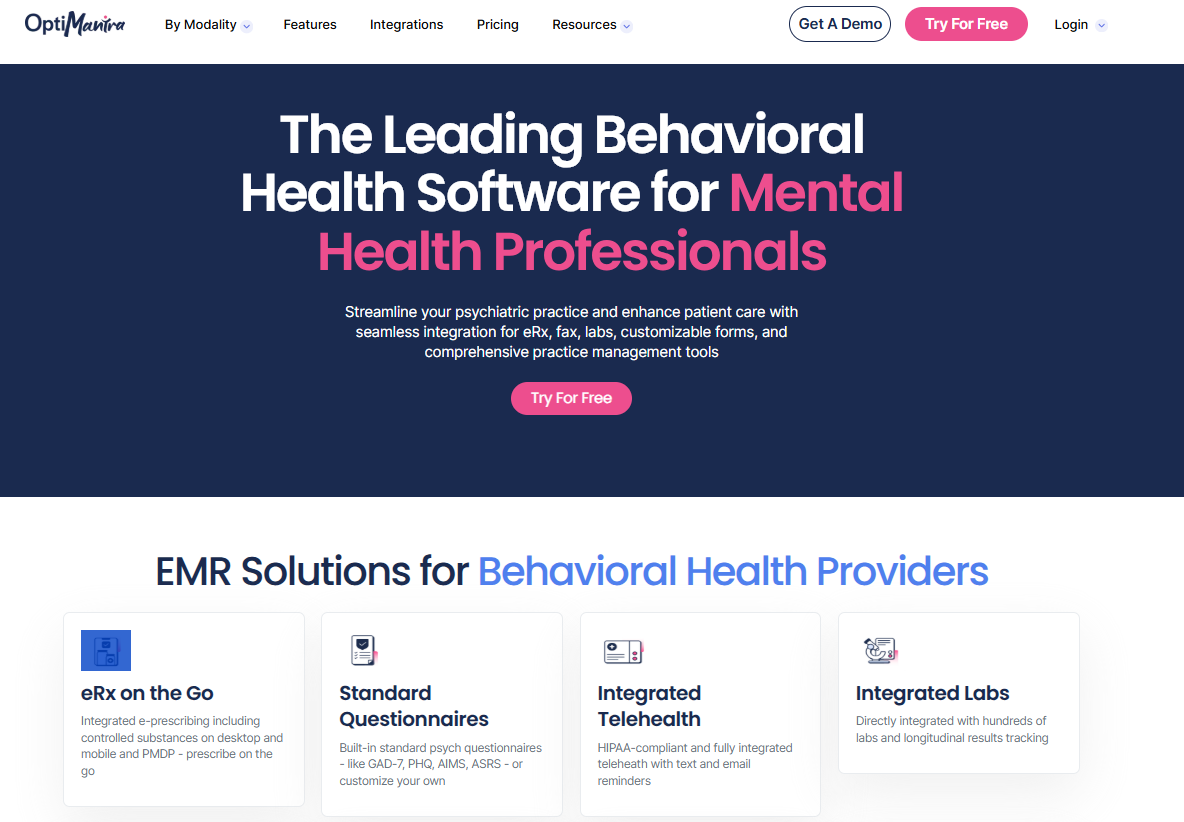
OptiMantra is a comprehensive practice management and EMR platform designed for specialized and therapy-focused practices that require flexibility, depth, and scalability.
Key strengths include:
- Customizable clinical documentation for multiple therapy modalities
- Integrated scheduling, billing, and patient engagement
- Support for both insurance-based and cash-pay workflows
- Flexible workflows for individual, group, and multidisciplinary care
- Strong reporting and practice insights
OptiMantra is particularly well-suited for practices planning to grow, add providers, or expand services—while maintaining cohesive, organized operations.
Don’t just take our word for it. Aleksandra B. states, “What I like most about OptiMantra is its ability to integrate multiple aspects of practice management into one seamless platform. The ease of scheduling, telehealth functionality, and customizable documentation templates make it incredibly user-friendly. It’s efficient and helps streamline both patient care and administrative tasks, which is essential for my practice."
OptiMantra was recently awarded with badges from Gartner that cited them as having the Best Value and Best Customer Support across multiple categories.
The flexible documentation is highly praised, with Kayli C. an OptiMantra user and medical practice owner, saying “I really love the variety of options available for documenting patient visits, from custom forms, dot phrases to AI integrated scribe services. There's something for every brain and I'm finding a combination of all available options is working well for me!”
User Reviews:
- OptiMantra on Capterra: Rated 4.8/5 Stars
- OptiMantra on G2: Rated 4.9/5 Stars
Try OptiMantra with a free trial or demo today!
2. SimplePractice

SimplePractice is widely used among individual therapists and small practices due to its clean interface and ease of use.
Notable features include:
- Straightforward scheduling and documentation
- Built-in telehealth and client portal
- User-friendly experience with minimal setup
SimplePractice works well for clinicians seeking simplicity, though some practices may find it less flexible as they scale or diversify services.
Clients on Capterra have expressed concern regarding the cost and issues with telehealth, but find the platform to be comprehensive and intuitive.
Emily J., an Operations Manager said “It’s a great tool for some, but we determined it was not the best for our company. It is expensive and the benefits did not outweigh what we were missing that other EHRs had”.
User Reviews:
- SimplePractice on Capterra: Rated 4.6/5 Stars
- SimplePractice on G2: Rated 4.1/5 Stars
3. TherapyNotes

TherapyNotes emphasizes structured documentation and compliance support.
Key features include:
- Robust note templates
- Integrated billing and claims management
- Scheduling and client reminders
It’s a strong option for practices prioritizing detailed documentation and standardized workflows, particularly those focused on insurance-based care.
Users enjoy the responsive customer support, but have concerns over limited customization and technical problems with updates. A review from Ceara C., a Therapist, said “I found the support team very helpful in getting me setup. TherapyNotes was easy for both me and my clients to use which was a plus. The biggest reason I ultimately chose a different platform was because I wanted more freedom and flexibility with my documentation such as intake paperwork and notes. The templates in TherapyNotes offered minimal customization and that was ultimately a dealbreaker for me”.
User Reviews:
- TherapyNotes on Capterra: Rated 4.7/5 Stars
- TherapyNotes on G2: Rated 4.4/5 Stars
4. TheraNest
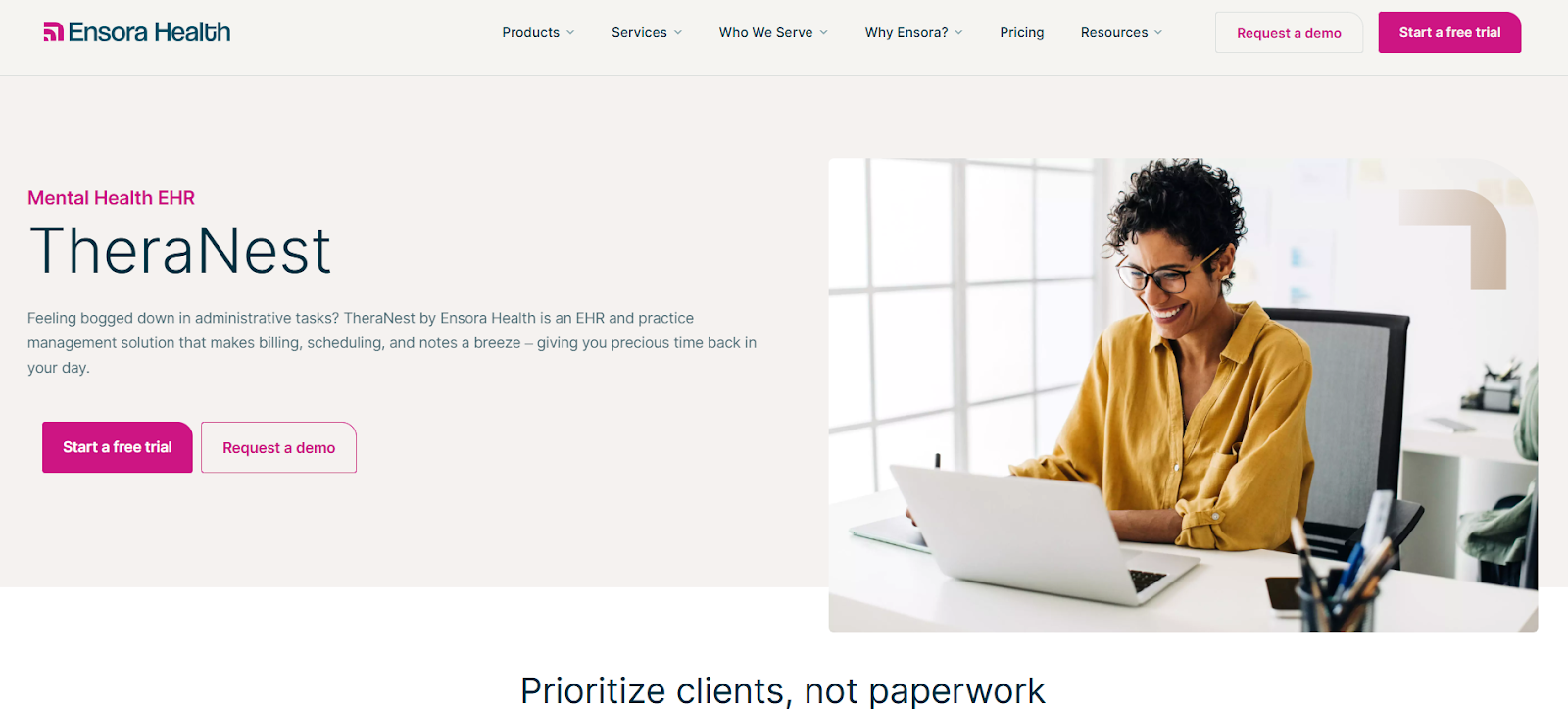
TheraNest offers a broad set of core features at an accessible price point.
Strengths include:
- Scheduling and client management
- Note templates and billing tools
- Basic reporting and telehealth
TheraNest is often chosen by smaller practices looking for essential functionality without advanced customization needs.
TheraNest users on Capterra mentioned that they like the intuitive workflow, but there are many technical glitches.
This is highlighted throughout their customer reviews. Zuzanna G., a Mental Health Therapist said, “when everything works it's ok, but when something breaks, makes work impossible”, and Kathy R., a BCBA and Center Director said, “I would like for this not to glitch so often. I am happier with this program than others are company has used.”
User Reviews:
- TheraNest on Capterra: Rated 4.4/5 Stars
- TheraNest on G2: Rated 4.2/5 Stars
5. Tebra
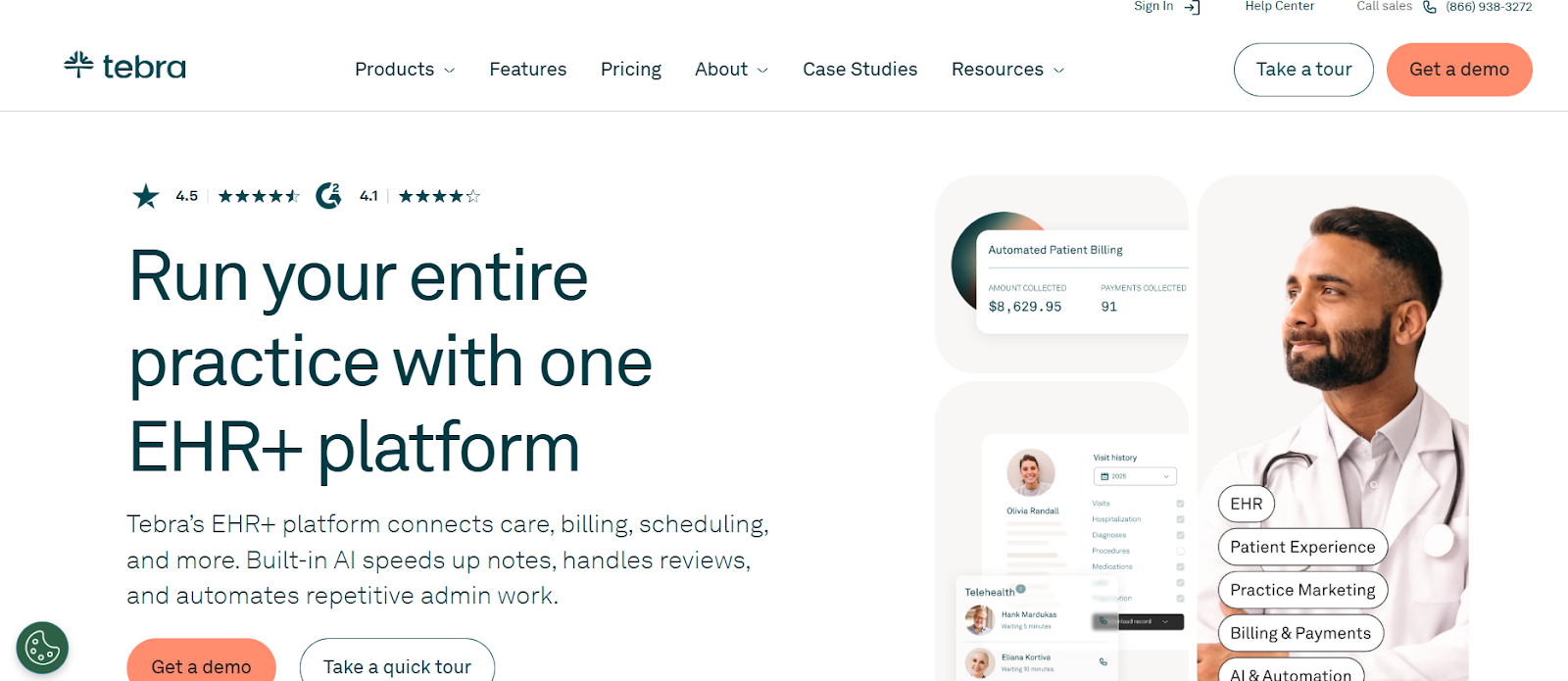
Tebra provides practice management tools that integrate therapy services within a larger healthcare ecosystem.
Key capabilities include:
- Practice management and billing tools
- Patient engagement features
- Reporting and analytics
This platform can be a good fit for therapy practices operating within larger medical organizations or integrated care settings.
Tebra users on Capterra mentioned that they like the navigation of the platform, but struggle with the customer service.
Mary J., an Owner Administrator said “The customer service reps are off shore, you cannot speak to anyone in the US and the language barrier is a challenge. We lost data from our files only to find out they did not have a backup for our data. Their clearing house stops claims and never notifies you so the problem can be resolved.”.
A positive review left by Medical Assistant, Amy S., said “My overall experience was good. It is a lot to take in but it was explained so I could understand it better.”.
User Reviews:
- Tebra on Capterra: Rated 3.9/5 Stars
- Tebra on G2: Rated 4.1/5 Stars
6. Practice Fusion

Practice Fusion is commonly used in general medical settings that include behavioral health services.
Notable aspects include:
- Basic practice management and charting
- ePrescribing and lab integrations
- Scalable infrastructure
While not therapy-specific, it can support therapy services within broader, multi-specialty practices.
On Capterra, users of Practice Fusion say that they find the platform intuitive and accessible. They dislike the lack of effective phone support and find there to be frequent technical problems.
Patti C., a Patient Care Manager and user of the platform, said “Getting an email response takes days. They cancelled a SCHEDULED phone call with me 15 minutes before the call via email. ZERO RESPONSE or recourse. Unable to actually SPEAK with anyone. Have waited over 40 minutes on hold with zero response.- multiple times”.
User Reviews:
- Practice Fusion on Capterra: Rated 4.8/5 Stars
- Practice Fusion on G2: Rated 4.9/5 Stars
How to Choose the Right Therapy Practice Management Software
Rather than focusing solely on feature lists, therapy practices should evaluate software based on alignment with their care model.
Key questions to ask:
- Does this system support my therapy modalities and visit structure?
- Can it scale as my practice grows?
- How well does it integrate clinical, financial, and administrative workflows?
- Will it reduce administrative burden or add to it?
Choosing software is a long-term decision, and flexibility matters more than surface-level features.
Why OptiMantra Stands Out for Therapy Practices
The best therapy practice management software in 2026 is one that supports both exceptional client care and sustainable operations.
While each platform on this list offers value depending on practice size and needs, OptiMantra stands out for therapy practices seeking flexibility, depth, and room to grow. Its customizable documentation, integrated workflows, and support for diverse care models make it well-suited for modern therapy practices that don’t want to outgrow their software.
As Ugochi I. says, “Optimantra is the best system for mental health providers. I reviewed many EMR/EHR systems before choosing Optimantra. It is easy to use and has the features that I need.”
For therapy practices planning for long-term success, whether expanding services, adding providers, or refining workflows, OptiMantra provides a unified platform designed to support clarity, efficiency, and high-quality care.
Try OptiMantra with a free trial or a personalized demo today!