HIPAA Training for Medical Spa Employees
HIPAA training for medical spa employees is training specifically designed to address the potential for impermissible disclosures of Protected Health Information in busy, client-facing environments in which individual staff members may carry more personal responsibility for HIPAA compliance than they would in a larger healthcare system, and in which there may be more social pressure to disclose information about other clients.
Where Medical Spa Violations Actually Come From
Most HIPAA violations at medical spas are not the result of malicious intent. They come from operational gaps that arise naturally in a busy, client-facing environment and a lack of HIPAA knowledge. A patient photo taken on a personal phone because the clinical system was slow to load. An intake form emailed as an unencrypted attachment because it was faster than uploading it to the secure portal. A front desk employee texting an appointment reminder from a personal number because the booking software was down. None of these actions is intended to cause harm, and none of them feels like a serious breach in the moment. Each one is a HIPAA violation. OptiMantra's overview of common HIPAA mistakes walks through several more examples of exactly this kind of everyday lapse, and the pattern holds across nearly every small practice setting, not just medical spas
The Small-Team Reality of Medical Spa Compliance
Medical spas can sometimes operate with a handful of employees covering reception, treatment, billing, and marketing at once. There is rarely a dedicated compliance department, and the person responsible for HIPAA oversight, for example the Medical Director or practice manager, is probably also delivering treatments or managing day-to-day operations. This means individual staff members carry more personal responsibility for HIPAA compliance than they would in a larger healthcare system, where dedicated departments and layered oversight catch mistakes before they become violations. OptiMantra's guide to HIPAA compliance for small practices covers this dynamic in more depth, including how blurred personal and professional boundaries with familiar patients tend to compound the risk.
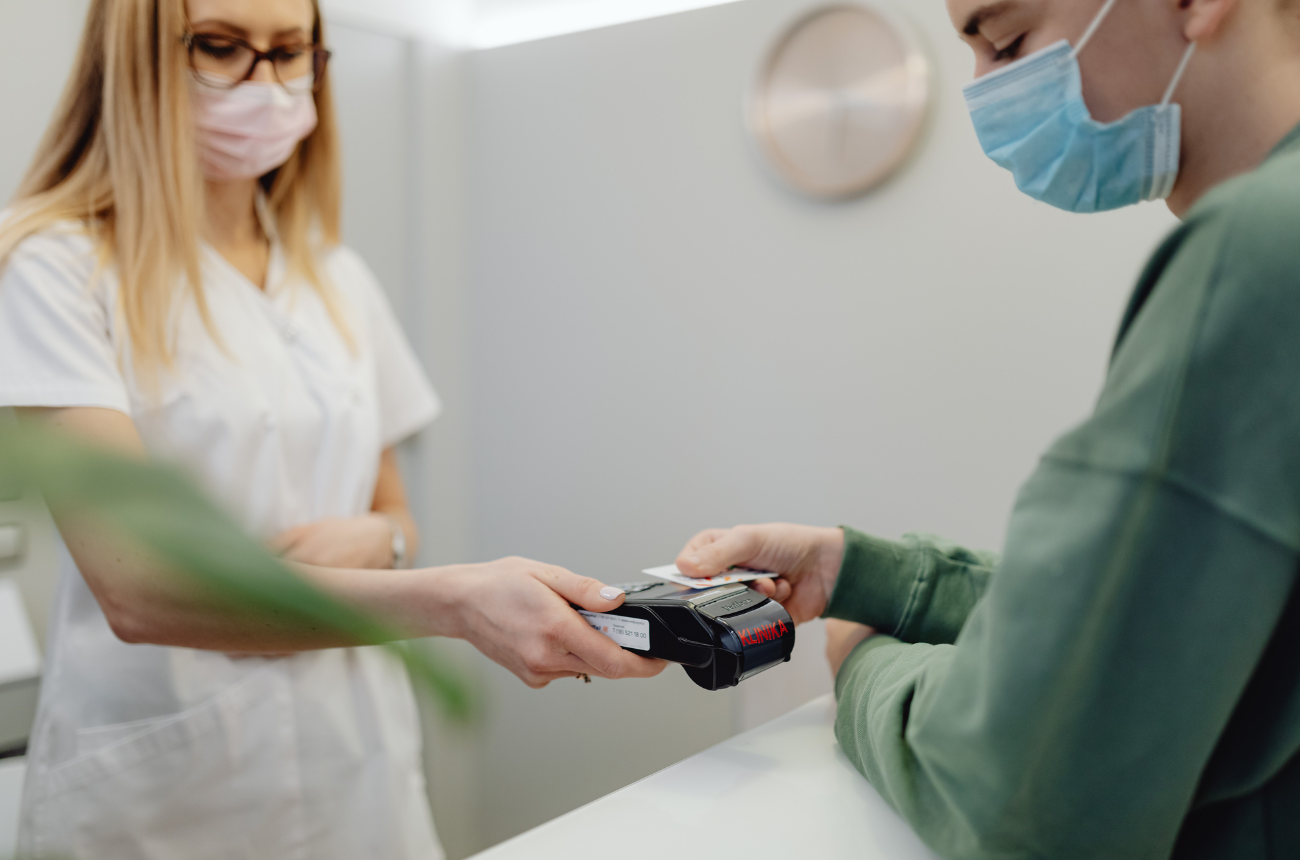
That responsibility is heaviest at the front desk and in shared treatment spaces, where clinical, administrative, and aesthetic functions overlap in the same physical area. A receptionist may be checking in one client, fielding a phone call about another client's treatment, and glancing at an open chart on the front desk monitor, all within the same few minutes. HIPAA training has to prepare staff for exactly this kind of simultaneous demand, not just the orderly, one-task-at-a-time scenarios that generic compliance courses tend to describe.
Staff also need training on the technology habits that create risk in small teams specifically. Sharing a login to save time between client appointments, leaving a charting system open on a shared device, or downloading a personal app to handle a task the official system makes cumbersome are all common shortcuts in small practices. Each one undermines the access controls and audit trails that the HIPAA Security Rule requires, and each one needs to be addressed directly in training rather than assumed away.
Community Disclosure Risk in Medical Spa Settings
Medical spas serving close-knit communities face a disclosure risk that training cannot skip. Staff may be asked, directly or through a friend or family member, to confirm or comment on a client's visit, condition, or treatment. The social pressure to answer informally is real, and staff need rehearsed, practical language for declining these requests without confirming anything by implication. A disclosure made quietly to one acquaintance does not stay contained. Once it is shared, the employee has no further control over where it goes or how it is repeated.
The financial consequences of these seemingly small lapses are larger than most staff assume. OptiMantra's breakdown of HIPAA violation costs for small practices shows that penalties scale with the level of negligence involved and whether corrective action was taken promptly, which means a single careless disclosure handled poorly can carry a materially different cost than the same disclosure caught and corrected quickly. Training that helps staff recognize a violation in the moment, rather than after a complaint is filed, is part of what keeps that cost on the lower end.
HIPAA Compliance by Design with OptiMantra
Training reduces violations most effectively when it is reinforced by the systems staff use every day. Employees who understand HIPAA and work inside an EMR built to prevent the common mistakes make far fewer errors than staff relying on memory and good intentions alone. OptiMantra's platform is structured around this principle. Treatment notes and intake forms live inside a single secure record instead of being emailed as attachments, role-based access limits what each employee can see to what their job actually requires, and built-in audit trails track activity so unusual access is visible rather than invisible. OptiMantra's own HIPAA compliance checklist for EMR platforms outlines the specific safeguards a system should provide, and practices considering a medical spa HIPAA compliance review can use it to evaluate whether their current setup is helping or working against their staff. When the compliant path is also the fastest and easiest one, staff are far less likely to reach for a workaround under time pressure. Combining trained staff with a system engineered to support that training, rather than work against it, is what closes the gap between knowing the rules and consistently following them.
HIPAA Training for Medical Spa Employees from The HIPAA Journal
For the training itself, The HIPAA Journal offers HIPAA Training for Medical Spa Employees, a course built specifically around the situations described above rather than generic healthcare compliance content. The course combines foundational training on the HIPAA Privacy Rule, Security Rule, and Breach Notification Rule with modules addressing the medical spa environment directly, including the physical layout risks of shared reception and treatment spaces, multitasking errors, technology and credential habits common to small teams, and the social pressure that comes with serving a tight-knit client community.
Learners complete the mandatory content first and receive an accredited HIPAA certificate on completion, with additional modules available afterward covering newer compliance topics such as social media and generative AI tools. Each lesson ends with a short knowledge check before the learner can move forward, so completion reflects actual comprehension rather than passive viewing. For medical spa managers tracking compliance across a team, administrative dashboards show real-time completion status, supporting the documentation that both the Privacy Rule and Security Rule require covered entities to maintain.